
Exploring Technologies for a Sustainable Future: A Collaborative Learning Experience
At the heart of our Year 11 curriculum lies an essential and timely question: What does it mean to human well, and what kind of future do we imagine for the years ahead? As part of their Human Technologies (HT) course, students have been engaging with the unit “Technologies for a Sustainable Future,” which invites them to reflect on the ecological and social challenges facing humanity and the tools needed to address them. This unit draws on a rich array of texts, thinkers, and insights—including the ARUP report on Four Plausible Scenarios, Nate Hagens’ seminal academic paper Economics for the Future, and discussions on key concepts such as complexity, the metacrisis, wisdom, and modernity, to name just a few.
HT as a Lens and Framework for “Human-ing” Well
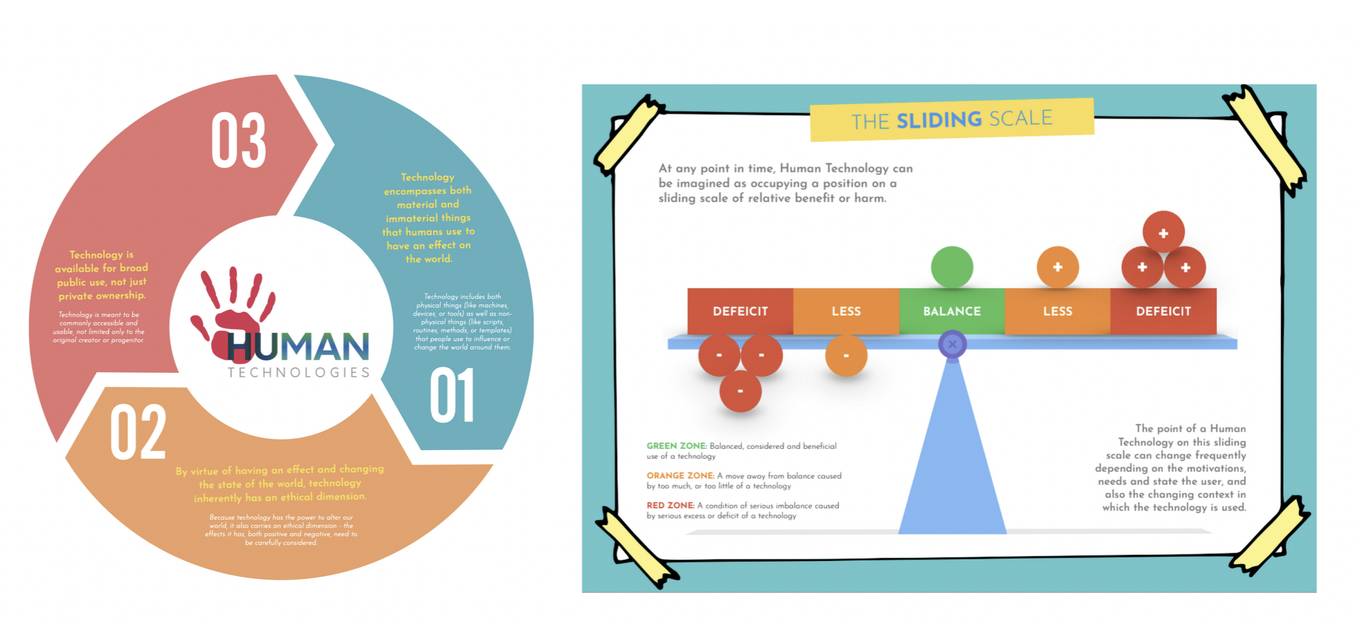
HT is a curriculum lens and framework that teaches students the “art and craft of being human.” It aims to equip students with the tools to live thoughtfully and responsibly, with care for themselves, others, and the environments—both social and ecological—that sustain life. Here, “technology” is understood in its broadest sense, encompassing not only machines and devices but also non-physical tools like language, habits, routines, and social systems. These “human technologies” shape how we think, feel, relate, and act in profound ways.
Across all five domains of the HT curriculum, students are encouraged to ask a consistent set of questions: What does this technology do? What values does it carry? Who benefits? Who is excluded? What is its history? What are the consequences—short- and long-term? This reflective process helps students develop discernment by examining assumptions—including their own and those embedded in the systems or tools they study. The goal is not indoctrination but critical thinking: What values are embedded in this system or tool? Who benefits, and who is harmed? What alternatives exist?
A key message throughout this approach is both compassionate and empowering: while early patterns can be influential, change is possible. Students are encouraged to recognize that they can learn new tools—new “technologies”—for thinking, relating, and coping, which opens up opportunities for growth and transformation.
Collaboration Across Departments
One of the most rewarding aspects of this unit has been the collaboration with teachers from other disciplines. Their expertise has enriched our students’ understanding of complex issues, helping them critically navigate the ARUP report's scenarios and grapple with the ecological and social dimensions of our human predicament.
For example, Mico Wong from the Mathematics Department delivered a session on “How to Use Mathematical Modelling to Predict the Population in 2050.” This allowed students to engage with real-world data and scenarios, making abstract concepts from the ARUP report tangible and actionable. Similarly, Martin Clarke from the Economics Department generously led a discussion with 11.1 students during their HT class. Drawing from Nate Hagens’ paper, he introduced students to key ideas that challenge traditional economic narratives, such as the biophysical constraints on growth and the behavioral tendencies that shape human systems. His session explored questions of energy dependence, resource scarcity, and the role of economics in navigating a sustainable future.
Through these collaborations, students gained critical insights into the interconnectedness of energy, economics, and human behavior. They also began to see these challenges through a systems lens—a way of understanding how individual parts of a system interact to produce broader, emergent behaviors. For example, students learned that systems thinking involves looking beyond linear cause-and-effect relationships to explore the feedback loops, interdependencies, and unintended consequences that shape complex systems.
These collaborative efforts across departments model a vital lesson for our students: the importance of turning to “more knowing others” when tackling complex problems. In this case, the expertise of colleagues in Maths and Economics provided students with new perspectives and tools to critically evaluate data, reflect on their own assumptions, and imagine more sustainable futures. This not only deepened their understanding of the unit’s content but also demonstrated the value of interdisciplinary thinking and cooperation in solving the challenges of our time.
As we continue to explore the question of what it means to “human well,” we are reminded of the wisdom in seeking out diverse voices and perspectives. It is through such collaboration—within our school community and beyond—that we cultivate the knowledge, care, and responsibility needed to shape a more sustainable future.